Forest Comb Honey – Raw Wild Honey in Natural Beeswax Comb
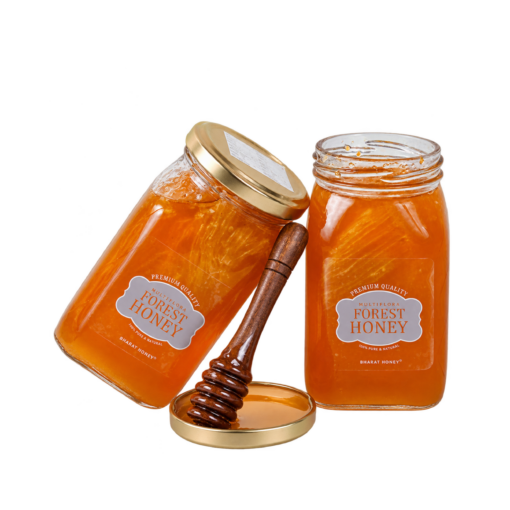
Bharat Forest Comb Honey brings you pure, natural honey in its original beeswax comb, collected from wild honeybee colonies in forest environments.
Unlike ordinary bottled honey, the honey remains inside the hexagonal wax cells constructed by honeybees. These comb sections are carefully harvested, inspected and packed without extracting the honey from the wax.
This raw forest honeycomb offers a distinctive experience: the natural sweetness of honey together with the chewy texture of edible beeswax.
Product: Forest Comb Honey
Source: Wild honeybee colonies
Honeybee: Wild rock bee (Apis dorsata)
Form: Honey inside natural beeswax cells
Handling: Selected, visually inspected and packed without honey extraction or liquid filtration
Declared Net Quantity: 450g
Forest Comb Honey from Wild Rock Bees
Wild rock honeybees (Apis dorsata) construct large, exposed honeycombs in locations such as tall trees and rock formations.
Unlike managed honeybee colonies housed in conventional beekeeping boxes, these wild bees build their combs in naturally selected nesting locations.
The honey they produce reflects the nectar-bearing flowers available within their foraging range. Consequently, Forest Comb Honey may differ in colour, flavour and aroma between harvesting regions and seasons.
Bharat Honey works with traditional honey collectors who understand the challenges of harvesting honey from these wild colonies.
Careful Selection of Honey-Bearing Comb
A wild honeybee comb has different areas serving different purposes. Certain cells store honey, while others may contain pollen or developing bees.
For Bharat Forest Comb Honey, the objective is to select the honey-bearing portion rather than the brood area containing larvae or pupae.
The harvested sections are visually inspected for unwanted debris and material unsuitable for packing.
This selective approach is important because customers purchasing Forest Comb Honey expect edible honey and beeswax, not brood or unrelated hive material.
Raw and Unfiltered Honeycomb – Without Extraction
Forest Comb Honey is different from extracted Wild Bee Forest Honey because the honey remains within its original comb structure.
The selected comb is not centrifuged or pressed to separate the honey. It also does not undergo the liquid straining process used for bottled honey.
As a result, customers receive honey together with the beeswax cells in which it was stored.
Suitable inspection, hygienic handling, protective packaging and storage remain essential even when a food product is described as raw or minimally processed.
The Natural Structure of Forest Honeycomb
Honeybees produce beeswax and arrange it into adjoining hexagonal cells. These cells provide a compact structure for storing honey and other materials used by the colony.
As nectar is transformed into honey and concentrated, bees store it in suitable cells. Many mature honey-filled cells are sealed with a thin beeswax covering.
A piece of Forest Comb Honey may contain both capped and uncapped honey cells. Its shape and appearance reflect the natural comb from which it was selected.
Taste and Texture of Wild Forest Honeycomb
Forest Comb Honey combines two different textures in one piece.
The honey provides sweetness and floral flavour, while the beeswax offers a chewy structure that gradually releases the honey as it is eaten.
Unlike a manufactured sweet, natural honeycomb is not uniform in appearance. The thickness of the wax, colour of the honey and arrangement of the cells can differ from one section to another.
These variations are part of its natural presentation, although appearance alone cannot establish purity or food safety.
What Does Forest Comb Honey Naturally Contain?
The two principal components of Forest Comb Honey are honey and beeswax.
Honey consists mainly of naturally occurring sugars and water, together with smaller quantities of other constituents. It may also contain naturally occurring pollen.
Beeswax is a distinct bee-produced material composed largely of wax esters, hydrocarbons and related compounds.
Although a honeybee colony also produces or uses substances such as royal jelly and propolis, these should not be presented as guaranteed or nutritionally significant ingredients of the selected honeycomb without appropriate analysis.
How to Eat Forest Comb Honey
Forest Comb Honey can be enjoyed directly or served with foods that complement its sweetness and unusual texture.
Directly from the Comb:
Cut a small piece, place it in your mouth and chew gently to release the honey.
With Bread:
Serve a small piece alongside bread or toast.
With Fruit:
Pair with sliced apples, pears or other fresh fruits.
With Cheese:
Add small portions to a cheese platter for a combination of sweet and savoury flavours.
For Honey Tasting:
Compare the flavour and texture of wild comb honey with extracted honey varieties.
The beeswax is edible. Some consumers chew and swallow small quantities, while others prefer to discard the remaining wax after enjoying the honey.
Can Forest Comb Honey Crystallise?
Yes. Honey inside the beeswax cells may crystallise naturally during storage.
Crystallisation occurs when naturally present sugars, particularly glucose, form crystals. Its rate depends on the honey’s composition and storage conditions.
If crystals form inside Forest Comb Honey, the honey may become firmer or grainier. This does not automatically indicate that sugar has been added.
Do not place honeycomb in direct sunlight to liquefy it. Excessive warmth may soften the beeswax, damage the comb structure and cause honey to leak. It is generally better to enjoy the honeycomb in its naturally crystallised state.
Storage and Handling of Forest Comb Honey
Natural honeycomb requires careful handling because its beeswax structure can be damaged by pressure or excessive heat.
Keep the product in its food-grade packaging, tightly closed and protected from dust, moisture and direct sunlight.
Follow any refrigeration or temperature-control instructions printed on the package. Do not assume that all forest comb honey has the same storage requirements.
Use clean, dry utensils when serving and follow the declared best-before date.
Forest Comb Honey vs Apiary Raw Comb Honey
The main distinction between these products is their sourcing method.
Forest Comb Honey comes from wild honeybee colonies that construct their combs in natural nesting locations.
Apiary Raw Comb Honey is collected from managed honeybee colonies kept by beekeepers.
Both offer honey inside beeswax cells, but they reflect different beekeeping and harvesting practices. Neither harvesting method, by itself, proves that one honey is more nutritious or pure than the other.
Frequently Asked Questions About Forest Comb Honey
Does Forest Comb Honey come from managed beehives?
No. Bharat Forest Comb Honey is sourced from wild honeybee colonies. It is different from regular apiary comb honey, which comes from managed beehives.
Does Forest Comb Honey contain bee larvae?
The selected product is intended to consist of honey-bearing comb sections. Bharat Honey visually inspects the harvested comb and separates unwanted material, including brood-containing sections, before packing.
Why can Forest Comb Honey have different shapes and wax thicknesses?
Wild honeybees construct their combs according to their nesting environment and colony requirements. Individual harvested portions can therefore differ in shape, cell arrangement and wax thickness.
Should I remove crystallised honey from the comb before eating it?
No. Naturally crystallised honey can be enjoyed while still inside the comb. Its texture may be firmer or grainier than liquid honey, but crystallisation alone is not a reason to remove it.
Discover Forest Honeycomb at Bharat Honey
Explore honey in its natural comb form and learn about different harvesting methods at the Bharat Honey Experience Centre in Hyderabad. Ask about the availability of Forest Comb Honey and other raw comb varieties before visiting.
Customer Experiences
Read customer feedback in this product’s Reviews section. You can also explore Bharat Honey customer reviews from Amazon for purchasing experiences across our wider honey range.
Important Product Information
Forest Comb Honey is a natural food containing sugars. Its raw presentation does not establish special medicinal or therapeutic properties.
Do not give honey or honeycomb to infants below 12 months of age.
People with known allergies to bee products or pollen should seek appropriate medical advice before consuming honeycomb.
Beeswax is chewy. Cut into small portions and supervise children to reduce choking risks.
Avoid direct sunlight and excessive heat, which can soften the wax and damage the comb.
Follow the current packaging for net quantity, storage instructions and best-before information.

Khaled Shaikh (Verified Customer.) –
Md Amer (Verified Customer.) –
Nice natural product