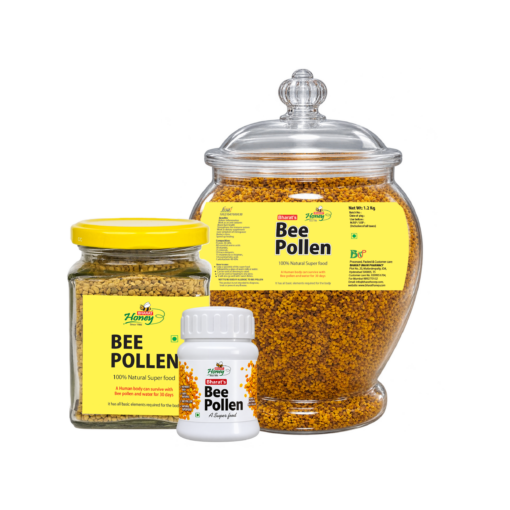
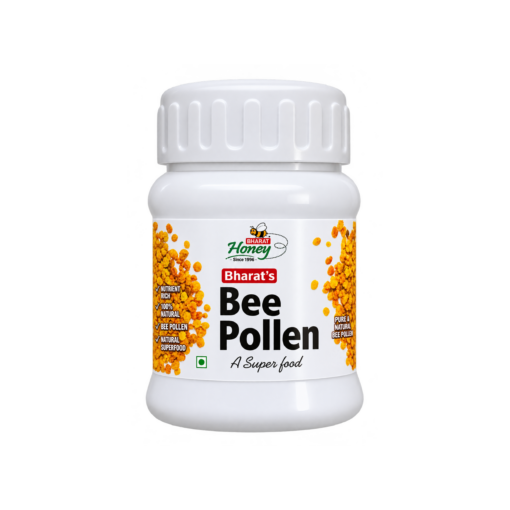
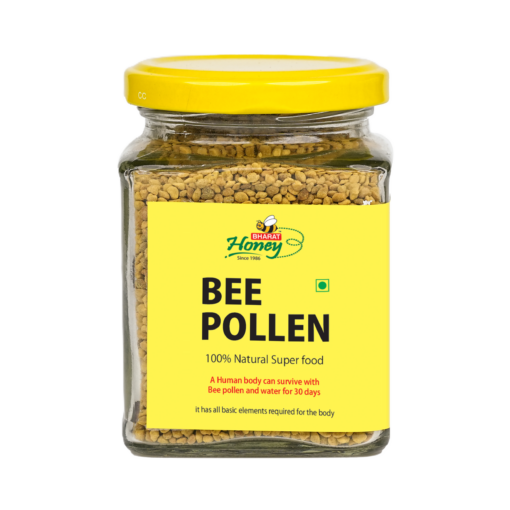
Bharat Bee Pollen Granules are a natural bee product collected from pollen gathered by honeybees while visiting flowers.
These small granules contain flower pollen mixed with tiny amounts of nectar and secretions from honeybees. Their natural composition includes carbohydrates, proteins, amino acids and various other plant-derived constituents.
Bee pollen has a distinctive floral, mildly sweet and earthy taste. It can be added to selected foods as part of a varied and balanced diet, subject to the important allergy precautions explained below.
Product:
Natural Bee Pollen Granules
Collected By:
Honeybees foraging on flowers
Form:
Small pollen pellets or granules
Flavour:
Floral, mildly sweet and earthy
Pack Size:
100g
Suggested Use:
As a food ingredient or topping, according to label directions
What Is Bee Pollen?
Bee pollen is flower pollen collected and transported by worker honeybees during their daily foraging activities.
As honeybees visit flowers, pollen grains attach to their bodies. The bees gather these grains, moisten them with small amounts of nectar and secretions, and form compact pellets.
The pellets are carried in specialised structures called pollen baskets, or corbiculae, located on the bees’ hind legs.
Why Do Honeybees Collect Pollen?
Honeybees collect nectar and pollen for different nutritional purposes within their colonies.
Nectar is the principal raw material used for honey production, while pollen provides important protein, lipids and micronutrients for colony development.
The colony uses collected pollen to support the nutritional needs of developing bees and adult workers. This makes pollen availability important for healthy colony development.
How Is Bee Pollen Collected by Beekeepers?
Beekeepers can collect bee pollen using specially designed pollen traps positioned at the entrances of selected beehives.
As returning worker bees pass through the trap, some of the pollen pellets carried on their hind legs become dislodged and fall into a collection tray.
The collected granules can then be prepared for suitable storage and packaging using appropriate hygienic handling methods.
Responsible Pollen Collection
Pollen is essential to the bee colony. Collection therefore needs to be managed so that honeybees continue to receive sufficient pollen for their nutritional requirements.
The amount collected should take account of pollen availability, colony condition and seasonal flowering patterns.
Natural Nutritional Composition of Bee Pollen
Bee pollen contains a mixture of naturally occurring nutrients and plant compounds. Depending on its floral source, it may contain:
Proteins and amino acids
Carbohydrates
Small quantities of fats and fatty acids
Various vitamins and minerals
Naturally occurring polyphenols and other plant compounds
Other constituents associated with the pollen’s botanical origin
The exact nutritional composition can differ considerably between floral sources, harvests and handling conditions.
Therefore, the presence of a nutrient in bee pollen does not automatically mean that a normal serving provides a nutritionally significant quantity. Refer to the current product label for declared nutritional values.
Why Do Bee Pollen Granules Vary in Colour?
One of the interesting characteristics of bee pollen is the natural variation in its appearance.
Depending on the flowers visited by honeybees, pollen granules may show different shades of yellow, orange, brown or other colours.
These differences reflect the diversity of botanical sources. Colour alone, however, cannot establish pollen quality, safety or geographical origin.
Bee Pollen and Honey – Two Different Bee Products
Although both are associated with honeybees and flowering plants, bee pollen and honey are different products.
Honey is produced primarily from floral nectar and consists mainly of naturally occurring sugars and water.
Bee pollen consists of compact pellets of collected flower pollen and contains a different combination of nutrients and plant compounds.
Neither product should be treated as a substitute for a varied, nutritionally balanced diet.
How to Use Bee Pollen Granules
For people who can safely consume bee pollen, the granules can be included in a variety of foods according to personal taste and the serving directions on the package.
Direct Consumption:
Chew the granules according to the suggested serving directions.
Yoghurt:
Mix into plain yoghurt for added flavour and texture.
Smoothies:
Blend with suitable fruits and other smoothie ingredients.
Breakfast Bowls:
Sprinkle over porridge, cereals or similar foods.
Water or Milk:
Mix with a beverage or soak briefly if a softer texture is preferred.
Ground Pollen:
Grind the granules and use as a topping on suitable foods.
Bee pollen should only be consumed by people for whom it is suitable. Individuals with relevant allergies should not attempt a small trial serving to test whether they will react.
Suggested Serving and Dietary Use
Use Bharat Bee Pollen Granules according to the serving instructions provided on the current product packaging.
There is no universally established daily serving quantity that can be recommended for every individual.
If you are considering bee pollen for a particular nutritional purpose, consult a qualified healthcare professional or registered dietitian, especially if you have allergies or an existing medical condition.
Important Allergy and Safety Information
Allergy Warning:
Bee pollen can cause allergic reactions, including potentially severe reactions such as anaphylaxis.
People with pollen allergies, previous reactions to bee products or a history of severe allergic reactions should avoid consumption unless specifically advised by an appropriate healthcare professional.
People with asthma should also seek medical advice before considering bee pollen.
Emergency Symptoms:
If breathing difficulty, swelling of the tongue or throat, faintness or another sign of a severe allergic reaction occurs, seek emergency medical assistance immediately.
Pregnant or breastfeeding women and people taking medication should consult their healthcare professional before using bee pollen.
Bee pollen is a food product and is not intended to diagnose, treat, cure or prevent any disease.
How to Store Bharat Bee Pollen Granules
Follow the storage instructions printed on the product packaging, including any temperature or refrigeration requirements.
Keep the container tightly closed and protect the granules from moisture and direct sunlight.
Use clean, dry utensils and follow the declared best-before period. If the product develops unusual moisture, visible mould or an abnormal odour, do not consume it.
Frequently Asked Questions About Bee Pollen Granules
Is bee pollen the same as pollen found naturally in honey?
No. Bee pollen granules are deliberately collected pollen pellets carried by honeybees. Honey may naturally contain small quantities of pollen, but its composition and typical serving size are different from those of bee pollen granules.
Can bee pollen be mixed with hot drinks?
Bee pollen may be mixed into beverages, although cool or moderately warm drinks may be preferable when you want to retain the granules’ original taste and texture. Follow the preparation and serving instructions on the packaging.
Is bee pollen a substitute for protein powder?
No. Although bee pollen naturally contains protein, the amount available from a normal serving may be modest and varies with its source. It should not be relied upon to meet a specific protein requirement without considering its verified nutritional values.
Can bee pollen be used to treat seasonal pollen allergies?
Bee pollen should not be used as a home treatment for pollen allergies. Its effectiveness for this purpose has not been established, and consumption can trigger serious allergic reactions in susceptible individuals. Seek advice from a qualified allergy specialist instead.
Explore Bee Products at Bharat Honey
Learn more about honeybees and explore different natural bee products through Bharat Honey. You can also visit the Bharat Honey Experience Centre in Hyderabad to discover how honey is sourced and experience different floral honey varieties.
Customer Experiences
Read feedback from Bee Pollen customers in this product’s Reviews section. You can also browse Bharat Honey customer reviews from Amazon for experiences across our broader product range.





Anonymous (Verified Customer.) –
Good
Utpal (Verified Customer.) –
Very good
Wasif Gilani (Verified Customer.) –
Universal natural supplement